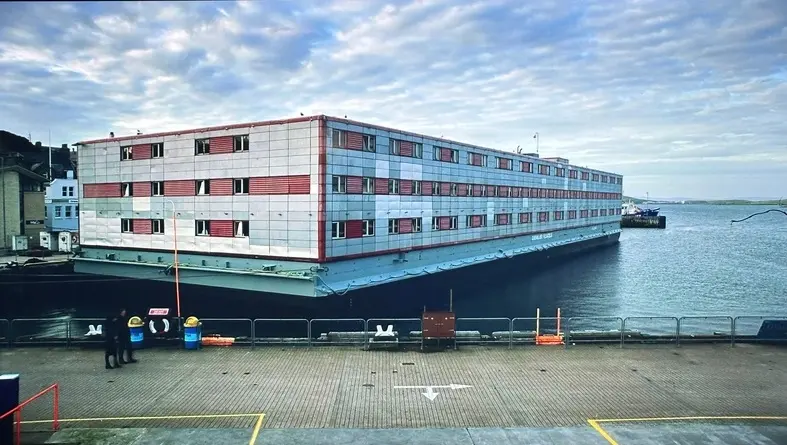
Landry & Kling has decades of expertise in sourcing safe, comfortable, and practical accommodation vessels and passenger ships for both dockside and offshore housing on a temporary basis.
Choosing the right accommodation vessel for your project can help ensure foster well-being and increase operational efficiency for your workforce.
Landry & Kling works with you to understand what your project needs the vessel to do, then we work to help you find the right solution.
1. Define the Vessel’s Purpose for Your Project
Different projects need different vessel capabilities. A vessel for a short-term global event may have different requirements from a long-term workforce housing project or an emergency response deployment.
Accommodation vessels support personnel working in remote, marine, and industrial environments like offshore energy sites and construction projects. They can also provide dockside event accommodation, disaster relief, and humanitarian response.
Whatever the scenario, these vessels provide essential onboard living and operational amenities, including sleeping accommodations, fully equipped kitchens and dining areas, recreational spaces, and required safety features.
2. Consider the Number of People, Duration, and Living Requirements
As you quantify the logistical needs for your accommodation vessel, including the number of people needing housing and their expected length of stay, Landry & Kling will also work with you to create a clear structure for your needs. These include whether rooms will be single or shared, shifts and schedules, dining needs, laundry and housekeeping, medical support, recreation and communal spaces, and whether the vessel should offer hotel-like comfort or practical accommodation with essential support.
In other words, it’s important to realize that capacity is influenced by much more than just the number of people alone. Landry & Kling is your reliable partner for determining the best way to achieve your project’s desired outcome through the diverse needs of your “population.”
3. Consider the Location
Is your project remote? Or is it in a busy coastal location that simply lacks adequate dockside accommodations? The precise positioning of the vessel is at the core of your planning needs. You may even find that you need more than one vessel.
Port and Berth Suitability
Not only will you need to consider different types of vessels, you will also need to be aware of the dynamic aspects of operating a vessel, which for many projects is less costly than building or seeking land-based accommodations. No two ports in the world are identical, and certainly, no two remote locations are. Planning will need to include berth availability; how your population will access the vessel and at what times of day; does your population need to haul equipment on and off the vessel each day; the depth of the water and the ability for certain sizes of vessels to not only dock, but also to navigate in and out of the location at the start and end of the project; how the vessel will be provisioned; and utilities including shore power, waste handling, and more.
4. Look Beyond Beds: Onboard Services Matter
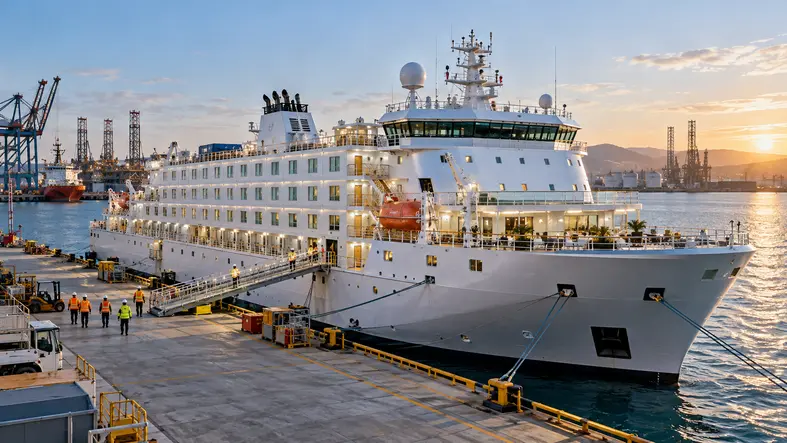
A successful accommodation-vessel program is about more than providing enough beds. For longer projects, onboard services can have a direct impact on comfort, morale, productivity, and project continuity. Catering and meal service, dining areas, housekeeping, laundry, reliable internet connectivity, and recreational space all help create a more sustainable living environment for those who are away from home.
Depending on the project, a vessel may also need to offer meeting or briefing rooms, medical or welfare support, regular cleaning and maintenance, and appropriate security, among other services. The Landry & Kling difference is that with our help, your population’s experience begins before anyone steps aboard. We help you consider the full experience while coordinating the services needed to support a comfortable, secure, and efficiently managed stay.
5. Match the Vessel to Safety, Compliance, and Project Risk
Selecting the right vessel is key to the success of your project, not only by seamlessly fulfilling logistical needs, but also by simplifying things. However, the reality is that requirements vary by location, vessel type, port, and project scope. Safety considerations should include onboard practices, emergency procedures, communications, lifesaving equipment, and the welfare of both passengers and crew. Certain projects may also require additional security planning, including coordination with port or local authorities. Insurance is also an important consideration. That’s why an experienced partner like Landry & Kling is essential.
6. Consider Budget, Availability and Timing
Workforce accommodation costs depend on more than a vessel’s charter rate. Vessel type, capacity, project duration, location, local regulation laws, and the level of onboard service all shape the overall budget — and, ultimately, the project’s success. A purpose-built accommodation vessel may suit one project, while a passenger ship or ferry may offer a better fit for another.
Timing and logistics also matter. Mobilization, port and berthing costs, seasonal demand, local requirements, security, transporting materials, crew transportation, and other technical elements can all affect availability and price. Early planning typically offers the widest range of vessel options and the greatest flexibility; urgent projects may require expedited mobilization, additional staffing, provisioning, or transportation arrangements.
Landry & Kling helps clients weigh these considerations together to identify a practical accommodation solution aligned with the project’s workforce needs, timeline, and budget.
7. Choose an Experienced Accommodation Vessel Partner
The flexibility of accommodation vessels makes them valuable in the maritime industry. Their ability to position near work sites allows for quick deployment and efficient operations, meeting the needs of different offshore projects. This adaptability ensures crews can access necessary resources and support without delays, helping smooth maritime operations.
It is critical to have an experienced partner like Landry & Kling that can guide you toward choosing the right vessel, supply the onboard operations, and ensure that all the necessary factors are not only considered, but optimized for your particular project.
Landry & Kling works with a global network of partners to ensure you have the most successful accommodation vessel experience possible.
FAQs
Can accommodation vessels be used for workforce housing?
Yes. Accommodation vessels can provide temporary workforce housing for remote, dockside, offshore, industrial, construction, energy, infrastructure, disaster relief, and humanitarian projects.
What services are usually needed onboard an accommodation vessel?
Common services include sleeping accommodation, dining, catering, housekeeping, laundry, recreation, security, access control, transport, and sometimes meeting, welfare or medical support.
When should I start planning an accommodation vessel project?
As early as possible, to ensure ample time for planning, to have the broadest possible selection of available vessels, and to prevent costly delays.